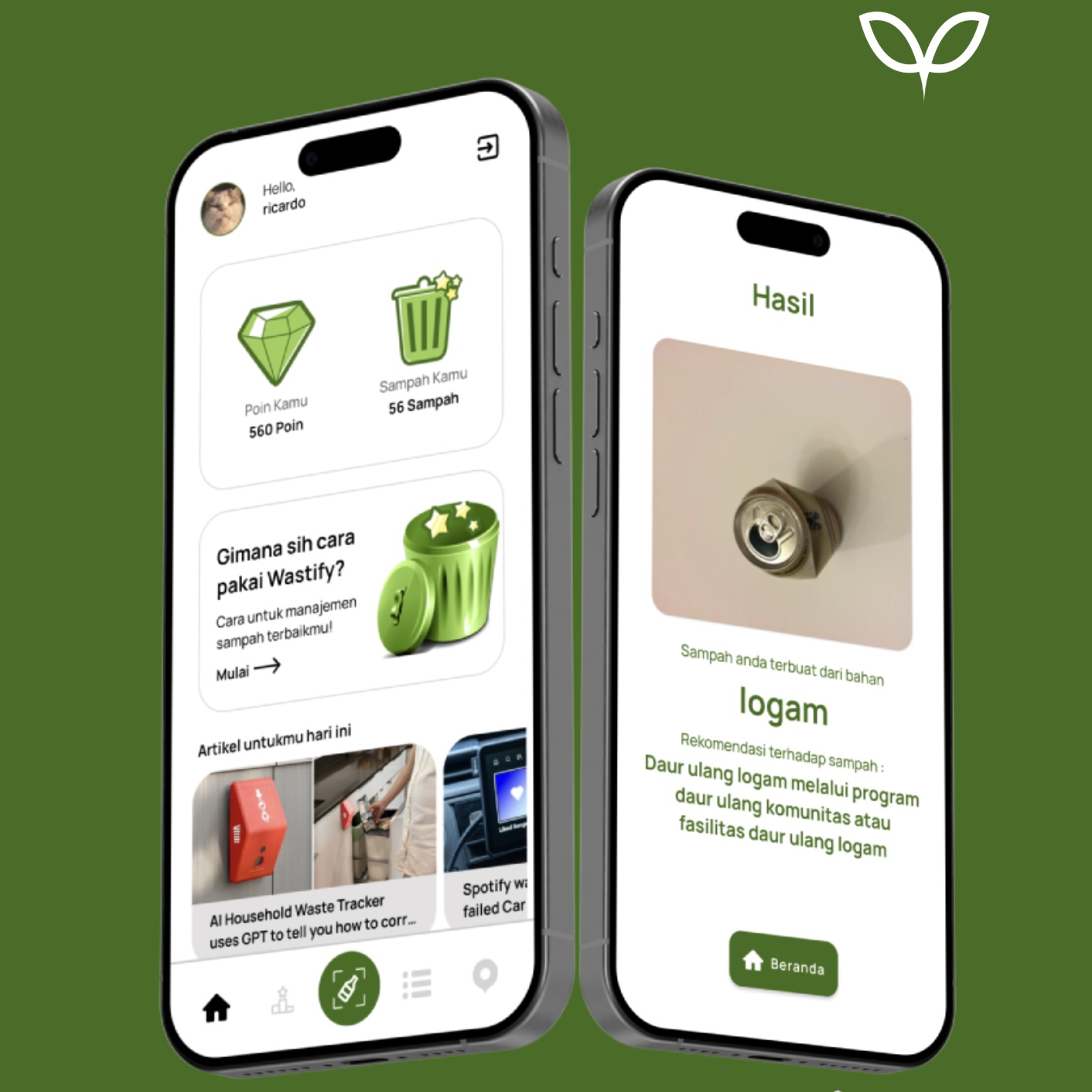
My role on the project: Lead Android Developer
Status: Bangkit Academy Capstone Project (2024)
Team Composition: 6 members (2 Android Developers, 2 Cloud Computing Engineers, 2 Machine Learning Engineers)
Chapter I - The Problem & Impact
According to WHO (2021) data, Indonesia is ranked as the fourth dirtiest country in the world. In 2022 alone, Indonesians generated 19.45 million tonnes of waste, the vast majority of which originated from households. Unmanaged waste leads directly to severe environmental and public health hazards, including worse urban flooding and bacterial health crises.
For our Bangkit Academy capstone project, our six-person multidisciplinary team set out to build Wastify, an intelligent mobile ecosystem designed to bridge the gap between everyday consumers, AI-driven waste classification, and local recycling networks.
Chapter II - Core Features & AI Integration
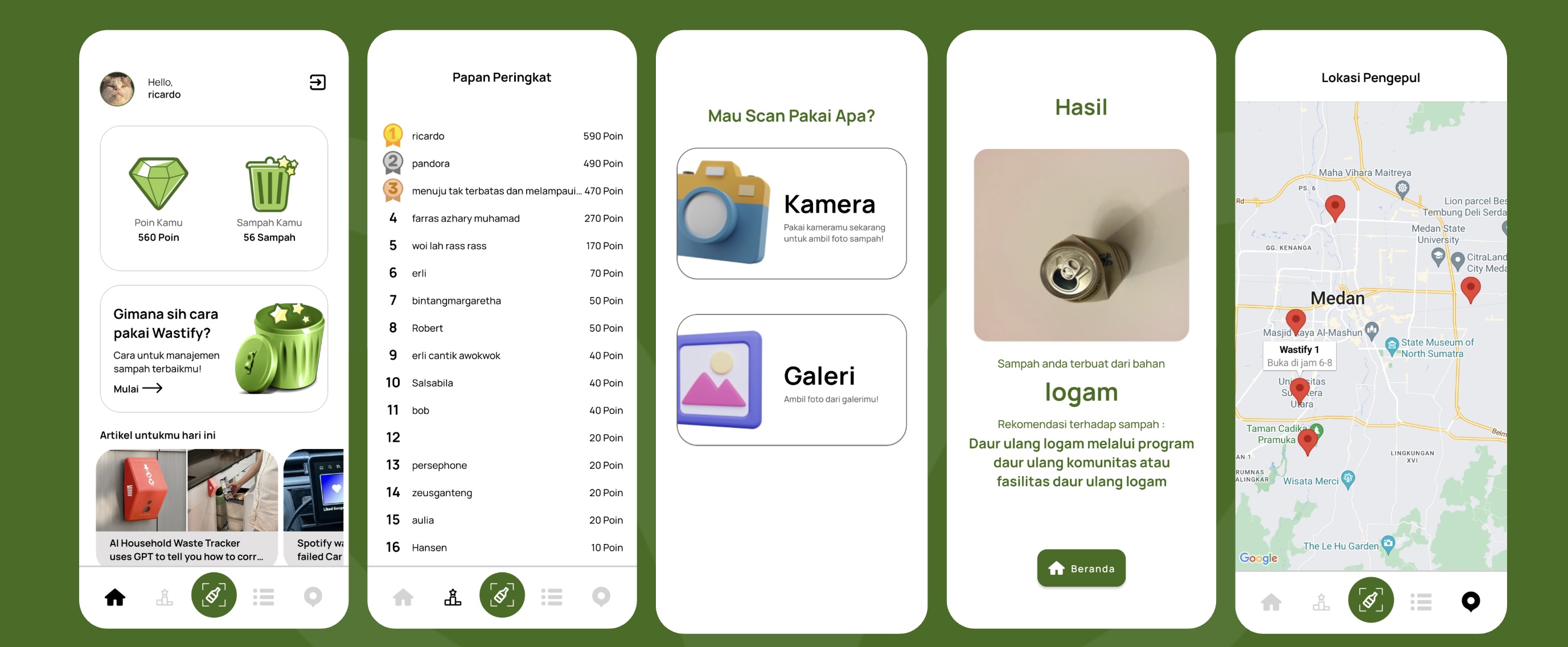
Wastify empowers users to take control of their environmental impact through an intuitive Android interface:
- AI Waste Classification: Users can snap a photo of their trash using the app’s camera or upload one from their gallery. The image is sent to cloud prediction endpoints, instantly returning a waste classification (Paper, Glass, Organic, or Plastic) along with actionable disposal and recycling recommendations.
- Collector Location Mapping: An integrated map interface helps users locate nearby waste collectors and recycling facilities in their area to properly drop off sorted materials.
- Gamification & Education: Features a point system, leaderboards, and educational articles to incentivize sustainable habits and teach proper waste management strategies.
Chapter III - Architecture & Cross-Team Collaboration
As the Lead Android Developer, I architected the core mobile client from the ground up using Kotlin, applying strict SOLID principles to maintain a clean, modular, and scalable codebase.
Because this was a large-scale capstone developed in tandem with our Cloud and Machine Learning engineers, cross-functional coordination was critical. I served as the primary technical bridge, implementing robust networking code to consume the cloud APIs built by our backend team, which powered the machine learning classification pipeline. Managing asynchronous data flows, camera image encoding, and JSON response mapping to deliver a seamless user experience was a defining achievement of this project.